AI and Therapy: What’s Private… and What’s Not
Artificial intelligence tools are becoming more common in everyday life, including in how people process thoughts, ask questions, or reflect on personal experiences. As this shift happens, it raises an important question:
What happens to the information you share with AI?
A Recent Legal Perspective
In U.S. v. Heppner, a recent federal case in New York, a court ruled that conversations with a public AI tool were not protected by attorney-client privilege.
In that case, the individual had used AI to think through legal strategy, but because the communication was shared with a third-party platform, the court determined it did not qualify as confidential in the same way as communication with a licensed attorney. This decision reinforces a broader legal principle:
When sensitive information is shared outside of a protected professional relationship, confidentiality may not apply.
How This Relates to Therapy
Therapy is one of the spaces where confidentiality is clearly defined and legally protected. That protection exists so people can speak openly, honestly, and without worrying about where their information might go.
AI tools don’t offer that same structure.
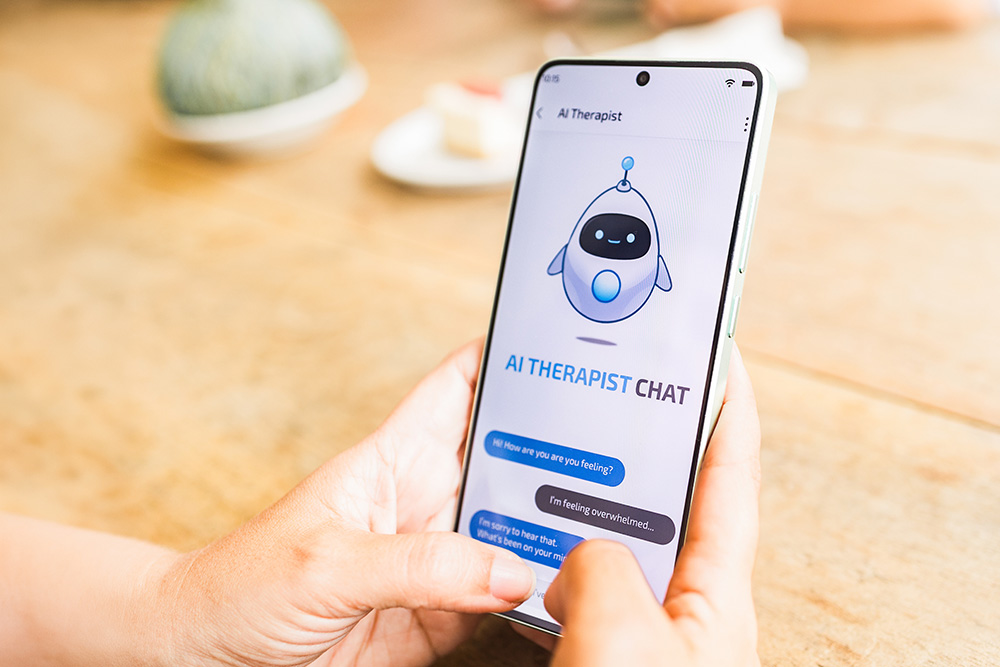
There’s no therapist-client relationship, no legal confidentiality, and no guarantee around how information is handled behind the scenes. Even if an interaction feels conversational, it isn’t the same as speaking with a licensed professional in a protected setting.
The Role of Privacy
It’s easy to forget how important privacy is until you really need it.
When something is personal, especially if it’s emotional, sensitive, or complex, having a space that is truly your own can change how freely you’re able to speak and how deeply you’re able to explore what’s going on.
That’s part of what therapy is designed to offer. Therapy is not just a place to talk, but a place where what you share is held with care, with intention, and within clear boundaries.
Why This Matters
As AI becomes more integrated into daily life, it’s natural that people will use it in more personal ways. This isn’t about avoiding technology; it’s about understanding its limits.
When something matters to you, where you share it matters too. Having a space that is both private and relational, not just responsive, makes a meaningful difference.
Looking For a Private Space to Talk or Receive Guidance?
If you’ve been thinking through something personal or trying to make sense of things on your own, therapy offers a place to do that in a way that’s confidential, steady, and supported.
If you’re interested in working with us, we invite you to reach out and get started. Please contact our Intake Coordinator at 949-236-1990 or at intakes@lisaeatontherapy.com, or learn more over at our Get Started Page.